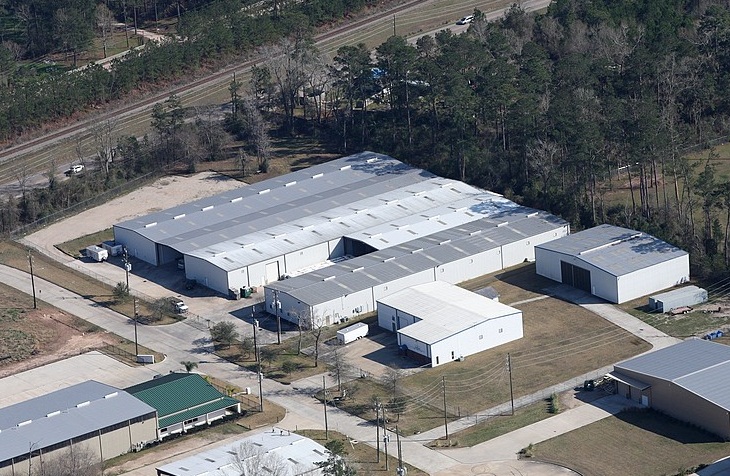
Minimum Order Quantity (MOQ): 616 pallets
Heat-treated (HT) pallets look just like regular wooden pallets — but they’re not.
They’ve been through a high-temperature sanitizing process that kills insects, larvae, mold spores, and anything else that could hitch a ride across state lines or international borders.
HT pallets are the passport-approved version of wood pallets.
They protect global supply chains.
They prevent contamination.
They keep governments happy.
And they make sure your freight doesn’t get rejected at a port, border, or inspection station.
If your operation exports anything — ingredients, plastics, chemicals, machinery, food, or packaged products — heat-treated pallets aren’t optional.
They’re mandatory.
Call or Text us at 832.400.1394
What Heat-Treated Pallets Actually Are
Heat-treated pallets are wooden pallets that have been heated in a controlled chamber until the internal core temperature reaches the standard required for international shipping.
The heat kills insects, eggs, moisture pockets, and organic contaminants.
After the process, the pallet receives the internationally recognized HT stamp — proof that it’s compliant and safe for global movement.
HT doesn’t change how the pallet looks.
It changes how the pallet qualifies.
Why Heat Treatment Exists
Heat treatment was created to stop the spread of:
- Invasive insects
- Wood-boring beetles
- Fungi
- Pathogens
- Contaminants that travel in untreated wood
Countries around the world enforce this rule to protect forests, crops, and ecosystems.
ISPM-15: The Global Rulebook for HT Pallets
ISPM-15 is the international regulation that tells exporters how wooden pallets must be treated.
To be compliant, pallets must:
- Be heated to the required temperature
- Hold that temperature long enough to sanitize the wood
- Receive the correct HT certification stamp
If the pallet doesn’t have the stamp, it’s treated as non-compliant, even if heat-treated.
Compliance lives or dies by the stamp.
Why Exporters Use HT Pallets Automatically
Exporters use HT pallets because:
- Most countries require them
- Customs will reject untreated pallets
- Non-compliance delays shipments
- Non-compliance adds cost and fines
- Non-compliance puts products at risk
It’s a simple equation:
Export = HT pallets.
HT Pallets vs Non-Treated Pallets: Quick Comparison
| Feature | Heat-Treated Pallet | Non-Treated Pallet | Emoji |
|---|---|---|---|
| International Shipping | Approved | Rejected | 🌍 |
| Pest Control | Excellent | Low | 🐜 |
| Cleanliness | High | Moderate | 🧼 |
| Moisture Stability | Better | Variable | 💧 |
| Cost | Slightly higher | Lower | 💵 |
| Freight Safety | Higher | Lower | 📦 |
HT pallets aren’t “nicer” — they’re simply qualified.
Does Heat Treatment Make Pallets Stronger?
Not really.
Heat treatment is about sanitation, not strength.
HT pallets perform like regular pallets in terms of:
- Load capacity
- Forklift handling
- Durability
The treatment prevents pests — it doesn’t reinforce lumber.
How the Heat-Treating Process Works
The process is simple but precise:
- Pallets are placed in a large heat chamber
- Heat is applied until the wood core reaches the required temperature
- The temperature is held long enough to sanitize the wood
- The pallets cool
- The HT stamp is applied
Once stamped, the pallets are certified for international movement.
Why HT Pallets Are More Stable in Humid Environments
Heat treatment reduces the pallet’s moisture content.
Less moisture = less swelling.
Less swelling = less warping.
Less warping = better stability under Gaylords and heavy loads.
This makes HT pallets ideal for:
- Food environments
- Ingredient warehouses
- Climate-controlled facilities
- Export shipping
- Long-distance freight
They simply hold shape better.
Why HT Pallets Are Safer for Clean Facilities
Heat treatment kills mold spores.
This makes HT pallets more suitable for:
- Food & beverage
- Pharmaceuticals
- Nutraceuticals
- Clean manufacturing
- Ingredient handling
Cleaner pallets = cleaner environment.
HT Pallets Are Required for Gaylords in Export Loads
When shipping Gaylord boxes internationally:
- The pallet MUST be HT
- The stamp must be visible
- The pallet must be clean
- The pallet must be structurally sound
Customs inspectors look for two things:
Stamp + stability.
Nothing else matters.
How to Identify an HT Pallet Instantly
Look for:
- The “HT” mark inside a box
- The country code (e.g., US)
- The facility certification number
If you don’t see the stamp, the pallet isn’t HT — even if someone says it is.
The stamp is law.
Why Some Companies Upgrade Entirely to HT Pallets
Many operations switch 100% to HT pallets because:
- It removes export headaches
- It simplifies receiving
- It standardizes handling
- It reduces moisture-born issues
- It improves pallet cleanliness
HT pallets create fewer problems across the board.
Do HT Pallets Cost More?
Yes — but only slightly.
The small premium eliminates:
- Export delays
- Re-palletizing costs
- Customs rejections
- Freight fines
- Warehouse contamination risks
HT pallets pay for themselves the first time you avoid a customs issue.
Call or Text us at 832.400.1394
Common Myths About HT Pallets
Myth #1: Heat treatment makes pallets stronger.
False — it makes them cleaner, not stronger.
Myth #2: All new pallets are automatically HT.
False — treatment must be certified.
Myth #3: You can heat-treat pallets yourself.
False — only certified facilities can issue legal HT stamps.
Myth #4: A faded stamp means it still counts.
False — illegible stamps are treated as non-compliant.
When You MUST Use HT Pallets
Use HT pallets if:
- You export product
- You ship to Canada or Mexico
- You use Gaylords in international freight
- You operate in a clean-room style environment
- You want moisture-stable pallets
- You handle food or ingredients
If you check any of these boxes → HT pallets are required.
When You Don’t Need HT Pallets
You can skip HT if:
- Your product stays domestic
- You’re cost-sensitive
- You handle scrap or waste
- Cleanliness doesn’t matter
But if export is even a possibility, always default to HT.
Final Thoughts: HT Pallets Are the Only Globally Accepted Wood Pallets
Heat-treated pallets keep freight moving smoothly.
They eliminate customs problems.
They prevent invasive species spread.
They reduce moisture-related pallet failures.
They improve cleanliness in every facility.
And they offer the simplest, most universal solution for export compliance.
If your operation ships across borders — or might someday — HT pallets aren’t optional.
They’re the standard.